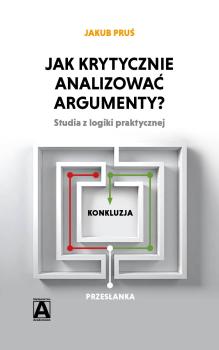
Jak krytycznie analizować argumenty? Studia z logiki praktycznej
Słowa kluczowe:
argument, argumentowanie, teoria argumentacji, argumentacja, wnioskowanie, rozumowanie, wynikanie, logika, logiczne myślenie, krytyczne myślenie, kultura logiczna, poprawność logiczna, przekonywanie, dyskurs, dyskusja, erystyka, debata, argument z autorytetu, logika praktycznaStreszczenie
Co się stanie, gdy ponad stu badaczy argumentacji z całego świata poprosimy o ocenę tych samych dziesięciu argumentów? W badaniu przeprowadzonym w latach 2024–2025 wyniki okazały się zaskakujące – mimo wyraźnych różnic światopoglądowych uczestnicy oceniali argumenty uderzająco podobnie, a ich werdykty pozostawały w dużej mierze odporne na stronniczość. Jeszcze bardziej intrygujące było jednak to, jak do tych ocen dochodzili – posługiwali się wieloma metodami naraz, często łącząc je intuicyjnie, a część nie potrafiła wskazać żadnej konkretnej metody, mimo że oceniali argumenty poprawnie. Czy to oznacza, że nie istnieje jedna uniwersalna metoda oceny argumentów? A może przeciwnie: że taka metoda dopiero czeka na sformułowanie? Ta książka podejmuje to wyzwanie: zbiera, porządkuje i integruje najważniejsze podejścia rozwijane w teorii argumentacji, proponując ich syntezę w jednej spójnej procedurze – syntetycznej metodzie analizy argumentacji (SMAA).
Bibliografia
Aikin, Scott & John Casey. 2011. “Straw Men, Weak Men, and Hollow Men.” Argumentation 25: 87–105. https://doi.org/10.1007/s10503-010-9199-y.
---. 2016. “Straw Men, Iron Men & Argumentative Virtue.” Topoi 35: 431–40. https://doi.org/10.1007/S11245-015-9308-5.
Ajdukiewicz, Kazimierz. 1974. Logika pragmatyczna. Warszawa: Państwowe Wydawnictwo Naukowe.
---. 1985a. „Co może zrobić szkoła dla podniesienia kultury logicznej uczniów.” W: Język i poznanie, 322–327. Warszawa: Państwowe Wydawnictwo Naukowe.
---. 1985b. „Logika, jej zadania i potrzeby w Polsce współczesnej.” W: Język i poznanie, 127–42. Warszawa: Państwowe Wydawnictwo Naukowe.
Barkun, Michael, ed. 2013. A Culture of Conspiracy Berkeley: University of California Press.
Bartula, Piotr. 2024. „Kto nie pracuje, ten gra na fortepianie.” Filozofuj! 59 (5): 45–47.
Berkowicz, Konrad. 2021. „Berkowicz vs Szczerba o związkach partnerskich i trójkątach.” YouTube. https://www.youtube.com/watch?v=k2lIlN5Gr08.
Będkowski, Marcin. 2019. „Nauczyć krytycznego myślenia i jasnej mowy. Postulaty krytycyzmu i jasności a sprawa tzw. logiki ogólnej.” Studia Semiotyczne 33 (2): 167–83.
Będkowski, Marcin & Jakub Pruś. 2023. “How Can Christian Philosophers Improve Their Arguments? Logical Culture and Critical Thinking.” Forum Philosophicum 28 (1): 63–83. https://doi.org/10.35765/forphil.2023.2801.04.
Blair, Anthony & Ralph Johnson. 1987. “Current State of Informal Logic.” Informal Logic 9 (2): 147–51. https://doi.org/10.22329/il.v9i2.2671.
Bocheński, Józef M. 1993. Sens życia i inne eseje. Kraków: Philed.
---. 1994. Sto zabobonów. Kraków: Philed.
Botting, David. 2014. “Without Qualification: An Inquiry into the Secundum Quid.” Studies in Logic, Grammar and Rhetoric 36 (49): 161–70. https://doi.org/10.2478/slgr-2014-0008.
Bremer, Józef. 2008. Wprowadzenie do logiki. Kraków: Wydawnictwo WAM.
Brinton, Alan. 1987. “Ethotetic Argument: Some Uses.” In Perspectives and Approaches, edited by Frans H. van Eemeren & Rob Grootendorst, 246–54. Berlin, New York: De Gruyter Mouton.
Budzyńska, Katarzyna. 2013. „Retoryczne strategie poznawcze.” Przegląd Filozoficzny – Nowa Seria 2 (86): 253–74. https://doi.org/10.2478/pfns-2013-0028.
Budzyńska, Katarzyna, Mathidle Janier, Juyeon Kang, Chris Reed, Patrick Saint-Dizier, Manfred Stede & Olena Yaskorska. 2014. “Towards Argument Mining from Dialogue.” Frontiers in Artificial Intelligence and Applications 266: 185–96. https://doi.org/10.3233/978-1-61499-436-7-185.
Budzyńska, Katarzyna & Chris Reed. 2011. “Whence inference?” University of Dundee Technical Report.
Budzyńska-Daca, Agnieszka & Jacek Kwosek. 2019. O sztuce prowadzenia sporów: komentarze do Schopenhauera. Warszawa: Wydawnictwo Naukowe PWN.
Butter, Michael. 2018. »Nichts ist, wie es scheint. Über Verschwörungstheorien«. Frankfurt am Main: Suhrkamp.
Channel 4 News. 2018. “Jordan Peterson debate on the gender pay gap, campus protests and postmodernism.” YouTube. https://www.youtube.com/watch?v=aMcjxSThD54.
Chichi, Graciela Marta. 2002. “The Greek Roots of the Ad hominem-Argument.” Argumentation 16: 333–48. https://doi.org/10.1023/
A:1019967112062.
Cialdini, Robert. 2016. Wywieranie wpływu na ludzi. Teoria i praktyka. Tłum. Bogdan Wojciszke. Gdańsk: Gdańskie Wydawnictwo Psychologiczne.
Czeżowski, Tadeusz. 1952. „Klasyfikacja rozumowań.” W: Odczyty filozoficzne, 128–35. Toruń: Towarzystwo Naukowe.
---. 1969. „O kulturze logicznej.” W: Odczyty filozoficzne, 185–190. Toruń: Państwowe Wydawnictwo Naukowe.
Dahlman, Christian, David Reidhav & Lena Wahlberg. 2011. “Fallacies in Ad Hominem Arguments.” Cogency 3 (2): 102–24.
Davidson, Donald. 2001. “Radical Interpretation.” In Inquiries into Truth and Interpretation Oxford: Clarendon Press.
Dennett, Daniel. 2013. Intuition Pumps and Other Tools for Thinking. New York: W. W. Norton Company.
Dewey, John. 1998. How We Think: A Restatement of the Relation of Reflective Thinking to the Educative Process. Boston: Houghton Mifflin. 1909.
Eemeren, Frans H. van. 2018. Argumentation Theory: A Pragma-Dialectical Perspective. Amsterdam: Springer.
Eemeren, Frans H. van, Bart Garssen, Erik C.W. Krabbe, A. Francisca Snoeck Henkemans, Bart Verheij & Jean H.M. Wagemans. 2014. Handbook of Argumentation Theory. Dordrecht: Springer.
Eemeren, Frans H. van & Rob Grootendorst. 1984. Speech Acts in Communicative Discussions. Dordrecht: Foris.
---. 1995. “The Pragma-Dialectical Approach to Fallacies.” In Fallacies: Classical and Contemporary Readings, edited by Hans V. Hansen & Robert C. Pinto, 130–44.
---. 2003. “A Pragma-dialectical Procedure for a Critical Discussion.” Argumentation 17: 365–86.
---. 2004. A systematic theory of argumentation. The pragma-dialected approach. Camrbidge: Cambridge University Press.
Ennis, Robert H. 1968. “Enumerative Induction and Best Explanation.” Journal of Philosophy LXC: 523–28.
---. 1996. “Critical Thinking Dispositions: Their Nature and Assessability.” Informal Logic 18 (2 & 3): 165–82.
Facione, Peter A. 2015. “Critical Thinking: What It Is and Why It Counts.” Insight Assessment.
Fariello, Gabrielle, Dariusz Jemielniak & Adam Sulkowski. 2021. “Does Godwin’s law (rule of Nazi analogies) apply in observable reality? An empirical study of selected words in 199 million Reddit posts.” New Media & Society 26 (1): 389–404. https://doi.org/10.1177/14614448211062070.
Fisher, Alec. 2011. Critical Thinking: An Introduction. Second ed. Cambridge: Cambridge University Press.
Fisher, Alec & Michael Scriven. 1997. Critical Thinking: Its Definition and Assessment. Norwich: Centre for Research in Critical Thinking.
Freeman, James B. 1991. Dialectics and the Macrostructure of Arguments: A Theory of Argument Structure. Pragmatics and Discourse Analysis. New York: Foris Publication.
Garvey, Brian. 2010. “Absence of Evidence, Evidence of Absence, and the Atheist’s Teapot.” Ars Disputandi 1: 9–22.
Glaser, Edward M. 1941. An Experiment in the Development of Critical Thinking. New York: Columbia University.
Godwin, Mike. 1994. “Meme, counter-meme.” https://www.wired.com/1994/10/godwin-if-2/.
Govier, Trudy. 1985. “Logical Analogies.” Informal Logic VII (1): 27–33.
---. 2010. A Practical Study of Argument. 7 ed. Belmont, CA: Wadsworth, Cengage Learning.
---. 2018. Problems in Argument Analysis and Evaluation. 2nd ed. Windsor: Windsor Studies in Argumentation. 1987.
Groarke, Leo A. & Christopher W. Tindale. 2013. Good Reasoning Matters! A Constructive Approach to Critical Thinking. 5th ed. Canada: Oxford University Press.
Haidt, Jonathan. 2012. The Righteous Mind: Why Good People Are Divided by Politics and Religion. New York: Vintage Books.
Hájek, Alan. 2017. “Notes to Pascal’s Wager.” The Stanford Encyclopedia of Philosophy. Accessed 1/8/2025.
Hamblin, Charles L. 1970. Fallacies. London: Methuen.
Hample, Dale. 1977. “The Toulmin Model and the Syllogism.” Argumentation and Advocacy 14 (1): 1–9.
Hansen, Hans. 2024. “Fallacies.” The Stanford Encyclopedia of Philosophy (Fall 2020 Edition). https://plato.stanford.edu/entries/fallacies/.
Hastings, Arthur. 1963. “A Reformulation of the Modes of Reasoning in Argumentation.” Ph.D., Northwestern University.
Heilmann, Anja, Anita Mehay, Richard G Watt, Yvonne Kelly, Joan E Durrant, Jillian van Turnhout & Elizabeth T Gershoff. 2021. “Physical punishment and child outcomes: a narrative review of prospective studies.” The Lancet 398 (10297): 355–64. https://doi.org/10.1016/S0140-6736(21)00582-1.
Hickson, Michael W. 2013. “A brief history of problems of evil.” In The Blackwell companion to the problem of evil, edited by Justin McBrayer & Daniel Howard-Snyder. Malden, MA: Wiley Blackwell.
Hill, William Egy. 1915. “My Wife and My Mother-in-Law “ Puck.
Hinton, Martin & Jean Wagemans. 2025. “Two-Tier Fallacy Theory: A New Approach to Assessing Argument Quality.” Informal Logic 45 (4): 472–503. https://doi.org/10.22329/il.v45i4.9435.
Hinton, Martin & Jean H. M. Wagemans. 2022. “Evaluating Reasoning in Natural Arguments: A Procedural Approach.” Argumentation 36: 61–84. https://doi.org/10.1007/s10503-021-09555-1.
Hołówka, Teresa. 2012. Kultura logiczna w przykładach. Warszawa: Wydawnictwo Naukowe PWN.
Hübl, Philipp. 2020. “In Search of a Master Plan. How Conspiracy Theorists Get the Scientific Method Wrong.” Elephant in the Lab. https://doi.org/10.5281/zenodo.3964396.
Jevons, William Stanley. 1918. Elementary lessons in logic: Deductive and inductive, with copious questions and examples and a vocabulary of logical terms. New York: MacMillan Co.
Johnson, Ralph H. 1996. The Rise of Informal Logic. Essays on Argumentation, Critical Thinking, Reasoning and Politics. Newport, VA: Vale Press.
Johnson, Ralph H. & J. Anthony Blair. 2002. “Informal Logic and the Reconfiguration of Logic “ In Handbook of the Logic of Argument and Inference. Studies in Logic and Practical Reasoning, edited by Dov M. Gabbay, Ralph H. Johnson, Hans J. Ohlbach & John Woods. Amsterdam: Elsevier.
---. 2006. Logical Self-Defense. New York: International Debate Education Association.
Johnson, Ralph H. & Marcin Koszowy. 2018. “Logical Culture as a Common Ground for the Lvov-Warsaw School and the Informal Logic Initiative.” Studies in Logic, Grammar and Rhetoric 55 (1). https://doi.org/10.2478/slgr-2018-0035.
Johnson-Laird, Philiip N. 2006. How We Reason. Oxford: Oxford University Press.
Jonkisz, Adam. 2020. Pytania i odpowiedzi. Ujęcie teoriomnogościowe. Kraków: Wydawnictwo Naukowe Akademii Ignatianum w Krakowie.
---. 2023. Zagadnienia semiotyki logicznej i ogólnej metodologii nauk. Kraków: Wydawnictwo Naukowe Uniwersytetu Ignatianum w Krakowie.
---. 2024a. Zagadnienia logiki formalnej i ogólnej teorii mnogości. Kraków: Wydawnictwo Naukowe Uniwersytetu Ignatianum w Krakowie.
---. 2024b. Zagadnienia syntaktyki i semantyki systemów dedukcyjnych. Kraków: Wydawnictwo Naukowe Uniwersytetu Ignatianum w Krakowie.
Joseph, Horace William Brindley. 1916. An Introduction to Logic. Oxford: Clarendon Press.
Keeley, Brian L. 1999. “Of Conspiracy Theories.” The Journal of Philosophy 96 (3): 109–26. https://doi.org/10.2307/2564659.
Kienpointner, Manfred. 1992. Alltagslogik: Struktur und Funktion Argumentionsmustern. Stuttgart: Fromman-Holzboog.
Kisielewicz, Andrzej. 2017. Logika i argumentacja. Praktyczny kurs krytycznego myślenia. Warszawa: Wydawnictwo Naukowe PWN.
Koszowy, Marcin. 2019. Autorytet w argumentacji i w dialogu. Teorie – modele – aplikacje. Białystok: Wydawnictwo Uniwersytetu w Białymstoku.
Koszowy, Marcin, Katarzyna Budzyńska, Barbara Konat, Steve Oswald & Pascal Gygax. 2022. “A Pragmatic Account of Rephrase in Argumentation: Linguistic and Cognitive Evidence.” Informal Logic 42 (1): 49–82.
Kotarbiński, Tadeusz. 1925. „Logika w sensie szkolnym a logika matematyczna.” Ruch Filozoficzny 9 (1–2).
---. 1960. Kurs logiki. Warszawa: Państwowe Wydawnictwo Naukowe.
---. 1985. Wykłady z dziejów logiki. Warszawa: Państwowe Wydawnictwo Naukowe.
Kublikowski, Robert. 2013. Definicje i rozwój wiedzy: Od Arystotelesa do Putnama.Prace Wydziału Filozoficznego Lublin: Towarzystwo Naukowe KUL.
Kuhn, Deanna. 1999. “A Developmental Model of Critical Thinking.” Educational Researcher 28 (2): 16–26.
Kwiatkowski, Tadeusz. 1962. “Pojęcie kultury logicznej.” Annales Universitatis Mariae Curie-Skłodowska. Sectio F 17: 1–16.
Lambert, Karel & William Ulrich. 1980. The Nature of Argument. New York: MacMillan.
Leśniewski, Stanisław. 1913. “The Critique of the Logical Principle of Excluded Middle.” W: Collected Works, red. Stanisław Surma, Jan Srzednicki & Stanisław Leśniewski. Dordrecht: Kluwer Academic Publishers.
Lewiński, Marcin. 2012a. “The Paradox of the Charity.” Informal Logic 32 (4): 403–39. https://doi.org/10.22329/il.v32i4.3620.
Lewiński, Piotr H. 2012b. Neosofistyka: Argumentacja retoryczna w komunikacji potocznej. Wrocław: Wydawnictwo Uniwersytetu Wrocławskiego.
Lostheghost. 2019. „R/Lotrmemes on reddit: Im just gonna leave this here” https://www.reddit.com/r/lotrmemes/comments/a7l1os/im_just_gonna_leave_this_here/.
Łukasiewicz, Jan. 1988. Sylogistyka Arystotelesa z punktu widzenia współczesnej logiki formalnej. Warszawa: Państwowe Wydawnictwo Naukowe.
Łukasiński, Wiesław, Bernard Bińczycki & Sławomir Dorocki. 2021. Kluczowe kompetencje organizacji XXI wieku. Wrocław: Arboretum.
Makuła, Szymon. 2025. “An Analogy-Based Approach to Argument Evaluation.” Argumentation. https://doi.org/10.1007/s10503-025-09655-2.
Makuła, Szymon & Jakub Pruś. 2026. “When Argument Matters More Than Politics: How Argumentation Theorists Evaluate Arguments.” Argumentation tba.
Marciszewski, Witold. 1991. Logika z retorycznego punktu widzenia. Warszawa: Zakład Semiotyki Logicznej Uniwersytetu Warszawskiego.
Martinjak, Igor & Jakub Pruś. 2025. “A Refined Concept of A Fortiori Arguments for Argumentation Theory.” Argumentation 39 (1): 103–128. https://doi.org/10.1007/s10503-024-09647-8.
Milgram, Stanley. 1963. “Behavioral study of obedience.” Journal of Abnormal and Social Psychology 67 (371–8).
Mill, John Stuart. 1846. System of Logic: Ratiocinative and Inductive. Vol. II. London: John W. Parker.
Moore, George Edward. 1993. “Proof of an External World.” In G.E. Moore: Selected Writings, edited by Thomas Baldwin, 147–171. New York: Routledge.
Novikoff, Alex J. 2013. The Medieval Culture of Disputation: Pedagogy, Practice, and Performance. Philadephia: University of Pennsylvania Press.
Nozick, Robert. 1981. Philosophical Explanations. Cambridge, MA: Harvard University Press.
Oswald, Steve. 2016. “Conspiracy and Bias: Argumentative Features and Persuasiveness of Conspiracy Theories.” In Argumentation, Objectivity, and Bias: Proceedings of the 11th International Conference of the Ontario Society for the Study of Argumentation (OSSA), 18-21 May 2016, edited by Pat Bondy & Laura Benacquista, 1–16. Windsor: OSSA.
P21. 2015. Partnership for 21st Century Skills – Core Intergration Content. Ohio Department of Education (Columbus).
Paley, William. 1879. Natural Theology: or, Evidences of the Existence and Attributes of the Deity. New York: Sheldon & Company. 1802.
Pawłowski, Tadeusz. 1978. Tworzenie pojęć i definiowanie w naukach humanistycznych. Warszawa: Państwowe Wydawnictwo Naukowe.
Perelman, Chaïm & Lucie Olbrechts-Tyteca. 1969. The new rhetoric: a treatise on argumentation. Translated by John Wilkinson & Purcell Weaver. Notre Dame: University of Notre Dame Press.
Platon. 1958. Hippiasz Mniejszy. Tłum. Władysław Witwicki. Warszawa: PWN.
Polyak, Steve. 2005. “Sunbeams.” The Sun May 2005.
Preciszewski, Marcin. 2024. „Prof. Strzembosz: projekt ustawy o „świadomym rodzicielstwie” niezgodny z Konstytucją.” eKAI. https://wiez.pl/2024/04/11/prof-strzembosz-aborcja-to-zawsze-ostatecznosc/.
Priest, Graham. 2023. Logika. Tłum. Elżbieta Drozdowska. Łódź: Wydawnictwo Uniwesytetu Łódzkiego.
Prinz, Aloys Leo. 2020. “Chocolate consumption and Noble laureates.” Social Sciences & Humanities Open 2 (1). https://doi.org/10.1016/j.ssaho.2020.100082.
Pruś, Jakub. 2019. „Argumentacja semantyczna – podstawowe pojęcia i problemy definicyjne.” Res Rhetorica 6 (4): 56–76. https://doi.org/10.29107/rr2019.4.3.
---. 2020. „Znaczenie znaczenia w argumentacji. Zarys argumentów semantycznych.” W: Słowo: struktura – znaczenie – kontekst, red. Ewa Szkudlarek-Śmiechowicz, Agnieszka Wierzbicka & Elwira Olejniczak. Łódź: Wydawnictwo Uniwersytetu Łódzkiego.
---. 2021. “How Can Modifications of Meaning Influence Argumentation? The Concept and Typology of Semantic Arguments.” Argumentation 35 (3): 483–508. https://doi.org/10.1007/s10503-020-09542-y.
---. 2023a. „Argument ad hominem, argument ad personam i atak osobisty – analiza porównawcza.” Res Rhetorica 10 (2): 47–73. https://doi.org/
29107/rr2023.2.3.
---. 2023b. Argumenty semantyczne – pojęcie, podział i kryteria oceny. Kraków: Ignatianum University Press.
---. 2023c. „Pojęcie kultury logicznej w Szkole Lwowsko-Warszawskiej a pojęcie krytycznego myślenia. Analiza porównawcza.” W: Racjonalizm – Krytycyzm – Ścisłość: Prace dedykowane Profesorowi Adamowi Jonkiszowi z okazji 70. rocznicy urodzin, red. Piotr Duchliński, Piotr S. Mazur & Jacek Poznański, 321–46. Krakow: Wydawnictwo Naukowe Uniwersytetu Ignatianum w Krakowie.
Pruś, Jakub & Andrew Aberdein. 2022. “Is Every Definition Persuasive? Douglas Walton on Persuasivness of Definition.” Informal Logic 42 (1): 25–47. https://doi.org/10.22329/il.v42i1.7211.
Pruś, Jakub & Fabrizio Macagno. 2024. “When Meaning Becomes Controversial. Critical Questions for Assessing Semantic Arguments.” Informal Logic 44 (2): 208–48. https://doi.org/10.22329/il.v44i2.8435.
Pruś, Jakub & Piotr Sikora. 2023. “The Dialectical Principle of Charity: A Procedure for a Critical Discussion.” Argumentation 37: 577–600. https://doi.org/10.1007/s10503-023-09615-8.
---. 2025. “A Cracovian Debate: Cooperative Debate Format Based on the Dialectical Principle of Charity.” Topoi 44. https://doi.org/10.1007/s11245-025-10244-x.
Quine, Willard Van Orman. 2013. Word and Object. Cambridge, MA: MIT Press. 1960.
Rahwan, Iyad & Chris Reed. 2009. “The Argument Interchange Format.” In Argumentation in Artificial Intelligence, edited by I. Rahwan & G. R. Simari, 383–403. Cham: Springer.
Reed, Chris, Douglas Walton & Fabrizio Macagno. 2007. “Argument Diagramming in Logic, Law and Artificial Intelligence.” Knowledge Engineering Review 22: 87–109.
Rudkouski, Piotr. 2016. „Problem argumentacji w teologii.” Praca doktorska, Wydział Filozofii i Socjologii, Instytut Filozofii, Uniwersytet Warszawski.
Russell, Bertrand. 1997. “Is There a God?” In The Collected Papers of Bertrand Russell, edited by John G. Slater. New York: Routledge.
Salmon, Merrilee H. 2013. Introduction to logic and critical thinking. Australia: Wadsworth.
Schopenhauer, Artur. 2012. Erystyka, czyli sztuka prowadzenia sporów. Warszawa: Oficyna Wydawnicza „Alma Press”. 1864.
Shelton, H.S. 1911–12. “A Theory of Material Fallacies.” In Proceedings of the Aristotelian Society, 1911 – 1912 edited by Bertrand Russell, 105–23. Oxford: Oxford University Press.
Sion, Avi. 1995. Judaic Logic: A Formal Analysis of Biblical, Talmudic and Rabbinic Logic. Geneva: Avi Sion.
Smullyan, Raymond. 1978. What Is the Name of This Book? The Riddle of Dracula and Other Logical Puzzles. Englewood Cliffs: Prentice-Hall.
Socrates Memes. 2026. Facebook. https://www.facebook.com/groups/
/.
Spaemann, Robert. 2006. Persons. The Difference between ‘Someone’ and ‘Something’. Translated by Oliver O’Donovan. Oxford: Oxford University Press.
Stevens, Katharina. 2021. “Fooling the Victim: Of Straw Men and Those Who Fall for Them.” Philosophy & Rhetoric 54 (2): 109–27. https://doi.org/10.5325/philrhet.54.2.0109.
Suchoń, Wojciech. 2005. Prolegomena do retoryki logicznej. Kraków: Wydawnictwo Uniwersytetu Jagiellońskiego.
---. 2008. Teoretyczne problemy logiki praktycznej. Kraków: Wydawnictwo Uniwersytetu Jagiellońskiego.
Szymanek, Krzysztof. 2004. Sztuka argumentacji. Słownik terminologiczny. Warszawa: Wydawnictwo Naukowe PWN.
---. 2008. Argument z podobieństwa. Katowice: Wydawnictwo Uniwersytetu Śląskiego.
Szymanek, Krzysztof & Krzysztof A. Wieczorek. 2020. Sztuka argumentacji. Rozszerzone ćwiczenia w badaniu argumentów. Warszawa: Wydawnictwo Naukowe PWN.
Szymanek, Krzysztof, Krzysztof A. Wieczorek & Andrzej S. Wójcik. 2003. Sztuka argumentacji. Ćwiczenia w badaniu argumentów. Warszawa: Wydawnictwo Naukowe PWN.
Talmudology. 2015. “Rabbi Meir on Maximizing Meaning.” Talmudology. Accessed 25 August 2021. http://www.talmudology.com/jeremybrownmdgmailcom/2015/3/29/ketuvot-58b-meaning.
Teninbaum, Gabriel H. 2009. “Reductio ad Hitlerum: Trumping the Judicial Nazi Card.” Michigan State Law Review 2009, no. Suffolk University Law School Research Paper: 541–77.
Thomas, Stephen N. 1986. Practical Reasoning in Natural Language. Englewood Cliffs: Prentice-Hall. 1973.
Thomson, Judith J. 1971. “A Defence of Abortion.” Philosophy and Public Affairs 1 (1): 47–66.
---. 1985. “The Trolley Problem.” The Yale Law Journal 94 (6): 1395–415. https://doi.org/10.2307/796133.
Tindale, Christopher. 2007. Fallacies and Argument Appraisal. Cambridge: Cambridge University Press.
Tokarz, Marek. 2006. Argumentacja, perswazja, manipulacja. Gdańsk: Gdańskie Wydawnictwo Psychologiczne.
Toulmin, Stephen E. 2003. The Uses of Argument. Cambridge: Cambridge University Press. 1958.
---. 2025. Sposoby użycia argumentów. Tłum. Tomasz Zarębski. Kraków: Universitas.
Trepczyński, Marcin & Marcin Będkowski. 2024. “Czeżowski’s Theory of Reasoning and Mediaeval Biblical Exegesis.” History and Philosophy of Logic 45 (2): 196–218. https://doi.org/10.1080/01445340.2024.2310454.
Trump, Donald J. 2016. Twitter. https://twitter.com/realDonaldTrump/status/803423203620245504.
Trzęsicki, Kazimierz. 1996. Logika – Nauka i sztuka. Białystok: Temida 2.
TVP Info. 2014. „Przedwyborcza awantura o UE w studiu TVP Info (Minęła dwudziesta TVP Info 06.04.2014).” YouTube. https://www.youtube.com/watch?v=MdS_te5OPYU.
---. 2023. „Debata wyborcza 2023.” YouTube. https://www.youtube.com/watch?v=XTHpX3VZ_K0.
Twardowski, Kazimierz. 1920. „O wykształcenie logiczne.” Ruch Filozoficzny 5 (4–5).
---. 2014. „Autobiografia.” W: Twardowski. Myśl, mowa, czyn, red. Jacek Jadacki & Anna Brożek. Warszawa: Wydawnictwo Naukowe Semper. Original edition, 1926.
Visser, Jacky, Marcin Koszowy, Barbara Konat, Katarzyna Budzyńska & Chris Reed. 2017. “Straw man as misuse of rephrase.” In Argumentation and Inference. Proceedings of the 2nd European Conference on Argumentation, Fribourg, edited by Steve Oswald & Didier Maillat, 941–62. London: College Publications.
Wagemans, Jean. 2025. “Periodic Table of Arguments 3.0.” https://www.academia.edu/36621185/Periodic_Table_of_Arguments_3_0.
Walton, Douglas. 1987. “The Ad Hominem Argument as an Informal Fallacy.” Argumentation 1 (3): 317–31.
---. 1995a. “Appeal to Pity: A Case Study of the Argumentum ad Misericordiam.” Argumentation 9: 769–84. https://doi.org/10.1007/BF00744757.
---. 1995b. A Pragmatic Theory of Fallacies. Tuscaloosa: University of Alabama Press.
---. 1996. Argumentation Schemes for Presumptive Reasoning. Mahwah, NJ: Lawrence Erlbaum Associates.
---. 1997. Appeal to Pity: Argumentum ad Misericordiam. New York: State University of New York Press.
---. 1999a. “Equivocation.” In Fallacies Arising from Ambiguity, edited by Douglas Walton. Dordrecht: Springer.
---. 1999b. “The Fallacy of Many Questions: On the Notions of Complexity, Loadedness and Unfair Entrapment in Interrogative Theory.” Argumentation 13: 373–83.
---. 2000. “New Dialectical Rules For Ambiguity.” Informal Logic 20 (3): 261–74.
---. 2005. “Deceptive Arguments Containing Persuasive Language and Persuasive Definitions.” Argumentation 19: 159–86. https://doi.org/10.1007/s10503-005-2312-y.
---. 2008. “The case of redefining „Planet” to Exclude Pluto.” Informal Logic 28 (2): 129–54.
---. 2010. “Why Fallacies Appear to be Better Arguments Than They Are.” Informal Logic 30, no. 2: 159–84. https://doi.org/10.22329/il.v30i2.2868.
---. 2011. “Defeasible Reasoning and Informal Fallacies.” Synthese 179 (3): 377–407. https://doi.org/10.2139/ssrn.1775825.
---. 2012. Informal Logic: A Pragmatic Approach. Second ed. New York: Cambridge University Press.
---. 2013. Methods of Argumentation. Cambridge: Cambridge University Press.
---. 2014. “A Dialectical Analysis of the Ad Baculum Fallacy.” Informal Logic 34 (3): 276–310. https://doi.org/10.22329/il.v34i3.4109.
Walton, Douglas & Fabrizio Macagno. 2009. “Reasoning from Classifications and Definitions.” Argumentation 23: 81–107. https://doi.org/10.1007/s10503-008-9110-2.
Walton, Douglas, Christopher Reed & Fabrizio Macagno. 2008. Argumentation Schemes. New York: Cambridge University Press.
Wasilewska-Kamińska, Ewa. 2016. Myślenie krytyczne jako cel kształcenia na przykładzie systemów edukacyjnych USA i Kanady. Warszawa: Wydawnictwa Uniwersytetu Warszawskiego.
Wason, Peter Cathcart. 1968. „Reasoning about a rule.” Quarterly Journal of Experimental Psychology 20 (3): 273–81. https://doi.org/10.1080/14640746808400161.
Whately, Richard. 1849. Logic. Edited by Samuel Taylor Coleridge.Encyclopaedia Metropolitana. London: John Joseph Griffin & Co Richard Green & Co.
---. 1855. Elements of logic. Boston & Cambridge: James Munroe and Company. 1827.
Wieczorek, Krzysztof A. 2007. „Dlaczego wnioskujemy niepoprawnie: teoria modeli mentalnych P. N. Johnsona-Lairda.” Filozofia Nauki 60 (4): 111–34.
---. 2013. Argumenty równi pochyłej. Analiza z perspektywy logiki nieformalnej. Katowice: Wydawnictwo Uniwerystetu Śląskiego.
Woleński, Jan. 1985. Filozoficzna Szkoła Lwowsko-Warszawska. Warszawa: Państwowe Wydawnictwo Naukowe.
---. 2005. Epistemologia. Warszawa: Wydawnictwo Naukowe PWN.
Woods, John. 2004. “Secundum Quid.” In The Death of Argument, edited by John Woods. Dodrecht: Springer.
Woods, John & Douglas Walton. 1979. “Equivocation and practical logic.” Ratio 21: 31–43.
World Economic Forum. 2020. The Future of Jobs Report. https://www3.weforum.org/docs/WEF_Future_of_Jobs_2020.pdf.
Załuski, Wojciech. 2023. Problemy antynatalistów z demografią. Filozofuj! 54 (6): 18–20.
Zarębski, Tomasz. 2025. „Filozofia jako poszukiwanie trafnych wyjaśnień – o życiu i twórczości Stephena E. Toulmina.” W: Stephen E. Toulmin, Sposoby użycia argumentów. Kraków: Universitas.
Ziembiński, Zygmunt. 1984. Logika praktyczna. Warszawa: Państwowe Wydawnictwo Naukowe.
Pobrania
Opublikowane
1 października 2026
Kategorie
Prawa autorskie (c) 2026 Wydawnictwo Academicon
Licencja

Utwór dostępny jest na licencji Creative Commons Uznanie autorstwa – Na tych samych warunkach 4.0 Miedzynarodowe.
Szczegóły dotyczące monografii
Co-publisher's ISBN-13 (24)
978-83-67134-41-5
Data pierwszego wydania (11)
2026-10-14