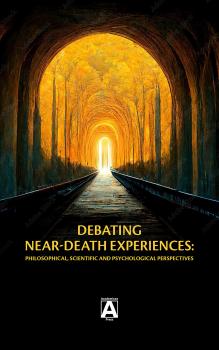
Debating Near-Death Experiences: Philosophical, Scientific, and Psychological Perspectives
Keywords:
Near-death experiences (NDEs), disconnected consciousness, naturalism, Al Sullivan, hallucination thesis, anesthesia awareness, ad hoc hypotheses, Peak in Darien experiences, Eben Alexander, Brain filter theory, Cardiac arrest, Veridical perception, Nonlocal consciousness, cardiac arrest, veridical perception, survival of consciousness, extended naturalism, mind-brain relationship, non-local consciousness, continuity of consciousness, primacy of consciousness, Aftereffects, Reductionism, Critical literature review, Existential transformation, Thomas Kuhn, consciousness, scientific paradigms, anomalies, philosophy of science, dualism, causal closure, materialism, physicalism, post-materialism, Buddhism, Karma, Rebirth, Intermediate state, Tibetan Book of the Dead, Proximate karma, Vietnam, sudden cardiac arrest (SCA), post-resuscitation integration, autoethnography, cross-cultural psychology, scientific paradigm, AsiaSynopsis
Reports of experiences resembling what we now call NDEs have a very long history. One of the earliest and best-known examples is the myth of Er in Book X of Plato’s Republic (614b–621d), in which a warrior believed to be dead returns to life and recounts his journey into an otherworldly realm. Medieval literature contains numerous similar accounts, including the Vision of Drythelm and the Vision of Tundale, in which apparent death or severe illness is followed by a journey into another realm, return to ordinary life, and, in some cases, profound personal transformation.
This publication was funded by Polish National Agency for Academic Exchange NAWA grant number BNI/PST/2023/1/00078/U/00001.
Chapters
-
Introduction
-
Beyond «mere hallucinations»: Near-death experiences as a window into consciousness
-
The Near-Death Dilemma
-
Near-Death Experiences: A Phenomenon Associated with Brain Filter Reduction
-
Near-Death Experiences Are More Than Hallucinations Converging Evidence for Their Reality and the Need for an Extended Naturalism
-
The Continuity of Consciousness A concept based on scientific studies on Near-Death Experience
-
The Impact of NDEs on Changes in Life Attitudes
-
NDEs as a Persistent Anomaly within the Naturalistic View of Reality, but Not a Refutation of It
-
Theories of Consciousness and Near-Death Experiences
-
Accounting for Veridical Perception in Near-Death Experiences: The Need for a Post-Materialist/Physicalist Perspective
-
Near-death experience: a buddhist interpretive approach
-
Consciousness Beyond Matter: Phenomenology of a Near-Death Experience (NDE) During Sudden Cardiac Arrest – A Patient-Perspective Case Study and a Challenge for Modern Medicine
-
The Scientific Paradigm from a Cross-Cultural Perspective: Western Naturalism and Holistic Conceptions of Consciousness in Eastern Traditions
Downloads
Published
September 30, 2026
Categories
Copyright (c) 2026 Academicon Press
License

This work is licensed under a Creative Commons Attribution-ShareAlike 4.0 International License.