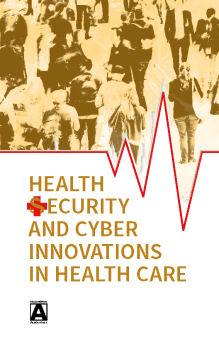
Health security and cyber innovations in health care
Keywords:
Health security, cyber innovations, health careSynopsis
Book abstract
The monograph “Health security and cyber innovations in health care” edited by Katarzyna Marzeda-Mlynarska, Justyna Kięczkowska, Liliana Wegrzyn-Odzioba, Aneta Wójciszyn-Wasil is an interdisciplinary analysis of contemporary challenges and opportunities related to the implementation of modern digital technologies in the health care sector in the context of ensuring the health security of individuals and entire populations. The publication is the result of cooperation between Lublin academic centers within the framework of a cyclical event, which is a nationwide scientific conference organized under the banner of health security. The organized conference is an opportunity for an in-depth discussion of representatives of various scientific disciplines: political science, international relations, law, science, security sciences, media and communication studies, medical and natural sciences, who in their research focus on the various elements constituting the issue at hand. The issues addressed during the conference were reflected in a monograph, which consists of 11 articles, in which the authors make an in-depth exploration of the relationship between the progressive digitization of medical systems and their impact on the efficiency of diagnostic, therapeutic and management processes. The paper takes into account both technological, organizational and social perspectives, showing how cyber innovations - such as telemedicine, artificial intelligence, big data and IoT systems - contribute to optimizing healthcare, improving access to medical services and increasing patient protection. At the same time, it draws attention to issues of data security, cyber threats and the ethical implications of implementing digital solutions. The monograph also addresses the integration of modern technologies with traditional health care systems, pointing to the need to build sustainable risk management strategies and create public policies that foster synergies between digital innovations and health security standards. The analyses contained in the work are based on a solid research background and case studies, so that the conclusions and recommendations presented are of high applied value to both health policy makers and practitioners of medicine and the IT sector. The volume opens with an article by Mark Pietrasia titled Specifics of securitization of health security risks, where the author analyzes the process of securitization of health security risks. Another article by Malgorzata Gruchola deals with the ethical challenges of using medical artificial intelligence in the healthcare system. Katarzyna Marzęda- Młynarska in the article Challenges and prospects for international food systems in light of the Covid-19 pandemic experience shows the impact of the COVID- 19 pandemic on international food systems. Justyna Szulich-Kałuża, Malgorzata Slawek-Czochra in the text entitled Covid passports in Poland and Europe - a symptom of post-pandemic normalization or behavioral intervention? A study based on empirical research and discourse analysis, analyze whether covid passports were perceived by citizens of Poland and other European Union countries.
Tomasz Bichta, in the article Health Security System in Angola, presents the health system in Angola and changes in the face of the Covid - 19 pandemic. Justyna Kięczkowska and Liliana Węgrzyn-Odzioba, in the article Teleporada- Opportunity or Threat to Health Security, analyze the challenges and risks associated with this type of service and present best practices and recommendations to minimize risks. In the text, on the other hand, Security of medical data in Poland after the Covid-19 pandemic, the authors assess the course of the digitization process in the area of security of medical data understood as “health data” and “personal data” of patients. Stanislaw Bichta in the article E-public relations in health care and related risks describes conducting public relations activities in the health care system. Paulina Szaniawska, in the article Ethics and security related to AI in medicine, discusses problems related to transparency, inequalities in access to AI. In the article Securing patient data in the era of digital medical platforms: cyber-intelligence as a response to modern threats, Mateusz Wojcik outlines the most important challenges and threats related to the protection of patient data. Aleksandra Kramek, in the article AI in modern medicine, analyzes the most important applications of AI in various fields of medicine, such as mental health treatment support, telemedicine, and care of chronically ill patients.
The monograph offers a complementary view of the dynamics of modern health care, highlighting the importance of cyberinnovation as an integral part of strategies to enhance health security under conditions of digital transformation
Chapters
-
Introduction
-
Specificity of securitisation of health security risks
-
Ethical challenges of using medical artificial intelligence in the healthcare system
-
Challenges and prospects for international food systems in the light of the Covid-19 pandemic experience
-
Covid passports in Poland and Europe – symptom of post-pandemic normalisation or behavioural intervention? A study based on empirical research and discourse analysis
-
Angola’s health security system
-
Online consultation – opportunity or threat to health security?
-
Security of medical data in Poland after the Covid-19 pandemic
-
E-public relations in healthcare and associated risks
-
Ethics and security related to AI in medicine
-
AI in modern medicine
-
Review of the post-conference monograph
Downloads
Published
September 30, 2025
Categories
Copyright (c) 2025 Academicon Press
License

This work is licensed under a Creative Commons Attribution-ShareAlike 4.0 International License.